

The skyline of Pompeii. TGG.
On Aug. 25, A.D. 79, the cities of Pompeii and Herculaneum were buried, along with many of the inhabitants, underneath layers of lapilli and volcanic material. The lost city of Pompeii was not excavated until Charles of Bourbon, King of Naples, issued the order in 1748.¹ The only recorded witness account of the eruption of Mount Vesuvius is contained in two letters from Pliny the Younger to his friend Tacitus, the Roman historian.

Ruins of Pompeii. TGG
When the eruption began in the early afternoon on Aug. 24 a large column of volcanic ash had begun shooting into the sky. This opening phase was later coined the Plinian phase. According to Pliny the Younger, his uncle, Pliny the Elder, an admiral in command of the Tyrrhenian fleet stationed at Misenum, sailed the bay of Naples to save others whose only means of escape was by ship. However, the admiral perished. Pliny the Younger recorded that his uncle was likely killed by the “…cinder-laden air that had clogged his air passages and blocked his throat…”² suffocating him to death.
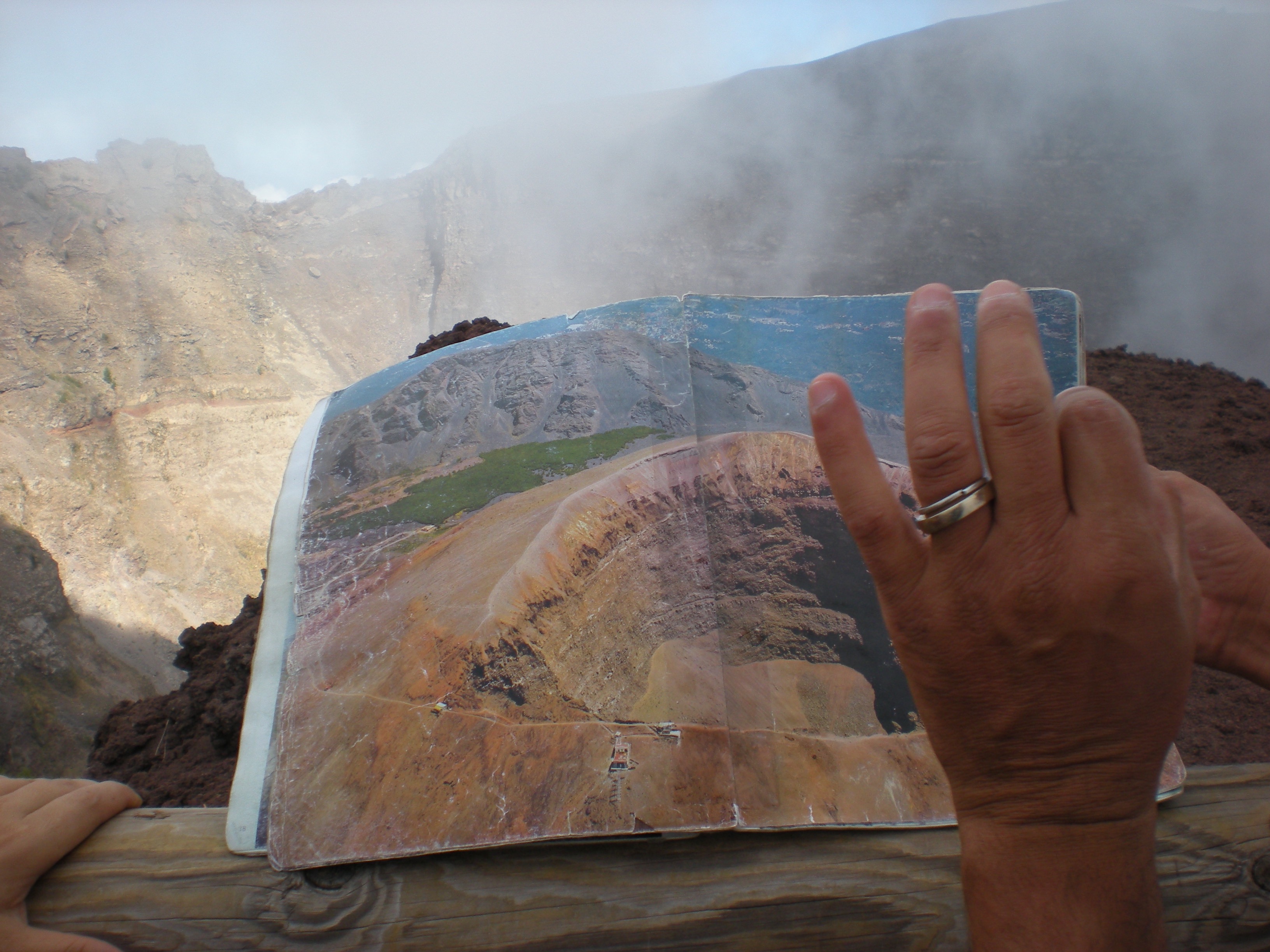
Caldera of Mount Vesuvius. In Lexi Krocks’s Anatomy of a Volcano, “a caldera is a large, usually circular depression at the summit of a volcano formed when magma is withdrawn or erupted from a shallow underground magma reservoir.” TGG.
By Aug. 25 the column of ash had fallen, marking the transitional phase of the eruption from the Plinian to the flow stage. A pyroclastic flow is an avalanche of lava, which can surge down the volcano at speeds greater than 60 miles per hour carrying debris, rocks, incendiary ash, and combustible gases.³ Multiple surges left Pompeii and Herculaneum and the remains of their people buried for nearly seventeen-hundred years.
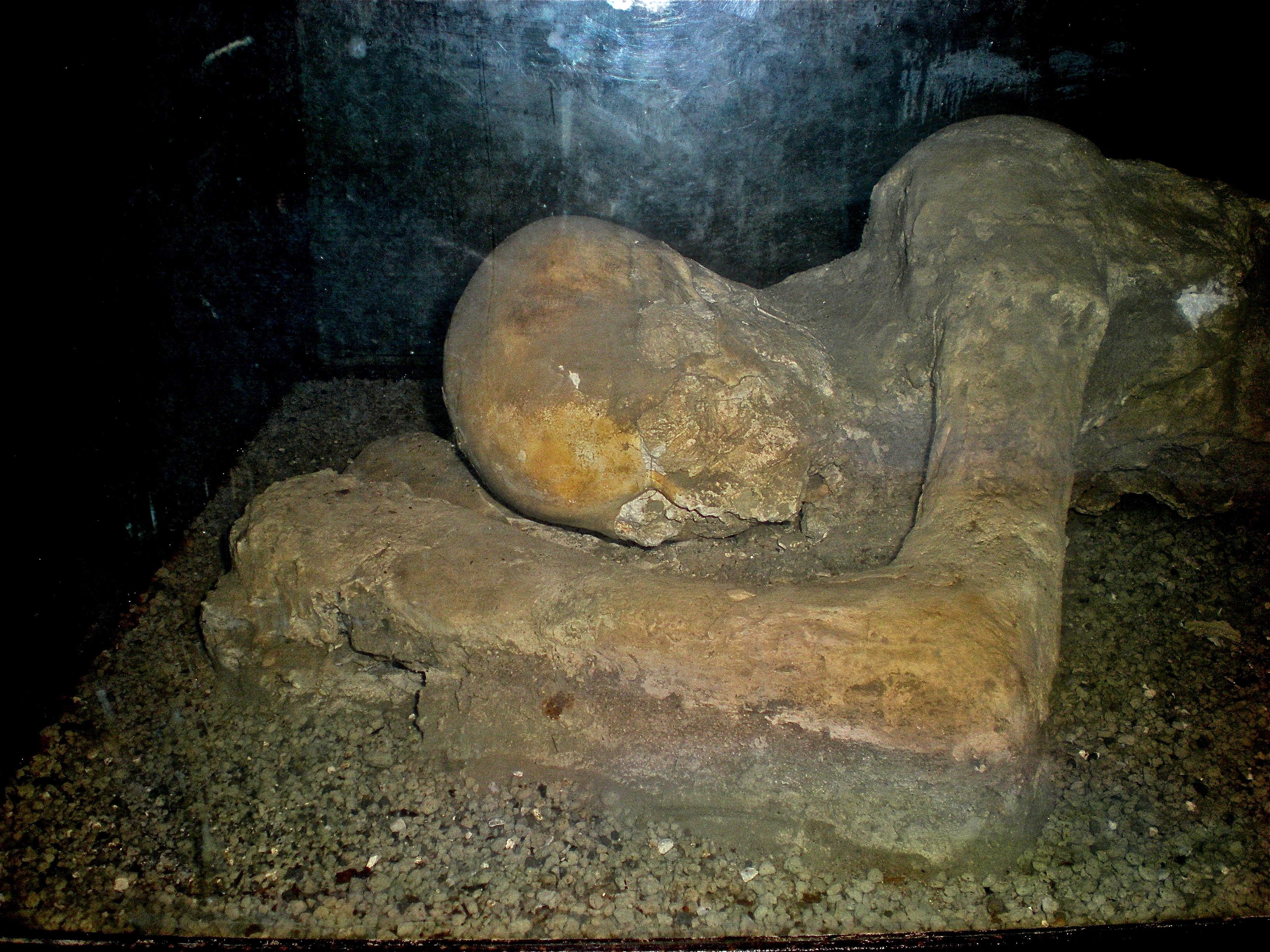
Plaster mold of a victim of the A.D. 79 eruption of Mount Vesuvius. TGG.
The eruption of A.D. 79 was not the most deadly volcanic eruption in world history, but it has become the most famous. The numerous relics recovered from ancient Rome, from masterful architecture and beautiful mosaics and paintings to the plaster molds of the victims revealing intimate details, such as facial expressions and body positions at the moment of their deaths, makes old Pompeii and a trip to the peak of Mount Vesuvius major tourist attractions. If you plan on visiting the Campania region of Southern Italy, be sure to dedicate no less than two days to the ruins of Pompeii, if not more.
Suggested Readings:
For an entertaining history of the A.D. 79 eruption, a concise, illustrative book called Ashen Sky: The Letters of Piny the Younger on the Eruption of Vesuvius, Illustrated by Barry Moser, written and translated by Benedicte Gilman, published by The J. Paul Getty Museum, Los Angeles.
For a more detailed and authoritative book, Pompeii: The History, Life and Art of the Buried City and Ernesto De Carolis’s Vesuvius AD 79: The Destruction of Pompeii and Herculaneum.
References:
1 Pompeii: The History, Life and Art of the Buried City. Edited by Marisa Ranieri Panetta. White Star Publishers, 2004.
2 Ibid.
3 Krock, Lexi. Nova: Anatomy of a Volcano. 2002. http://www.pbs.org/wgbh/nova/earth/volcano-parts.html
 The Good Gusto